
Criminal Cases in the Jeff Davis County Courts
Superior Court is Jeff Davis County’s felony trial court and part of the Brunswick Judicial Circuit. Its clerk keeps the judicial file after prosecutors bring an accusation or indictment. That file is separate from the sheriff’s arrest report and jail booking sheet. It can contain the case number, filed counts, calendar events, motions, plea, orders, judgment, sentence, and final disposition. Magistrate Court handles warrant applications, first appearances, and preliminary matters within its authority. Hazlehurst municipal matters may stay with the city court, so a search must follow the court that actually created the record.
The official Georgia Courts gateway explains the state court structure.
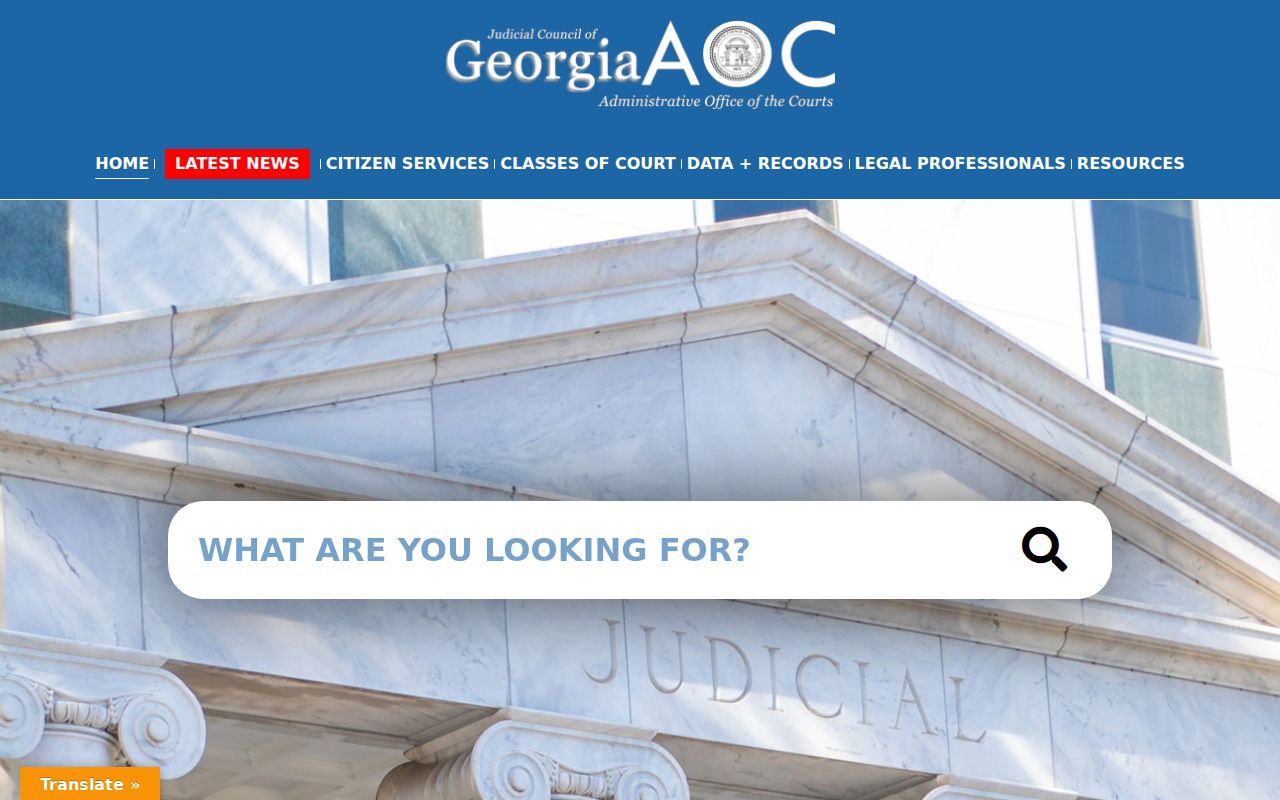
That structure is the key to avoiding a false “no case” conclusion after checking only one Jeff Davis County clerk.
Magistrate Records Come First
A new felony arrest may produce Magistrate Court records before a Superior Court case exists. A warrant application, first-appearance order, preliminary hearing, or bond record can be the first judicial trace. The Jeff Davis Magistrate Court gateway is the official starting point for those local records.

Confirm counter details through the live site before visiting because the county research did not establish fixed public-terminal hours or a complete online criminal index.
How to Search Case Records
Georgia has no single complete, free statewide trial-court database. The Judicial Council’s E-Access page routes readers toward participating clerk systems, and PeachCourt supports e-filing or document access for participating courts. Jeff Davis County coverage, image access, dates, and copy prices must be confirmed with the Superior Court clerk. Use this order:
- Choose Superior, Magistrate, or municipal court based on the charge and current stage.
- Give the clerk the defendant’s full name, aliases, and approximate filing year.
- Supply a case number when known; share birth data only through a secure clerk-approved channel.
- Ask for the docket sheet first, then identify the exact entries and orders needed.
- Confirm page, research, and certification charges before ordering copies.
| Field Label | Type | Required | Notes |
|---|---|---|---|
| Defendant name | Clerk query | Yes | Include spelling variants and aliases. |
| Case number | Identifier | No | Best route to one docket when available. |
| Filing year | Date range | No | An approximate year narrows common names. |
| Date of birth | Secure identifier | No | Provide only as the clerk directs. |
| Court or case type | Routing detail | No | Distinguishes felony, preliminary, and city files. |
The Georgia E-Access to Court Records page shows why readers must verify the local access route.
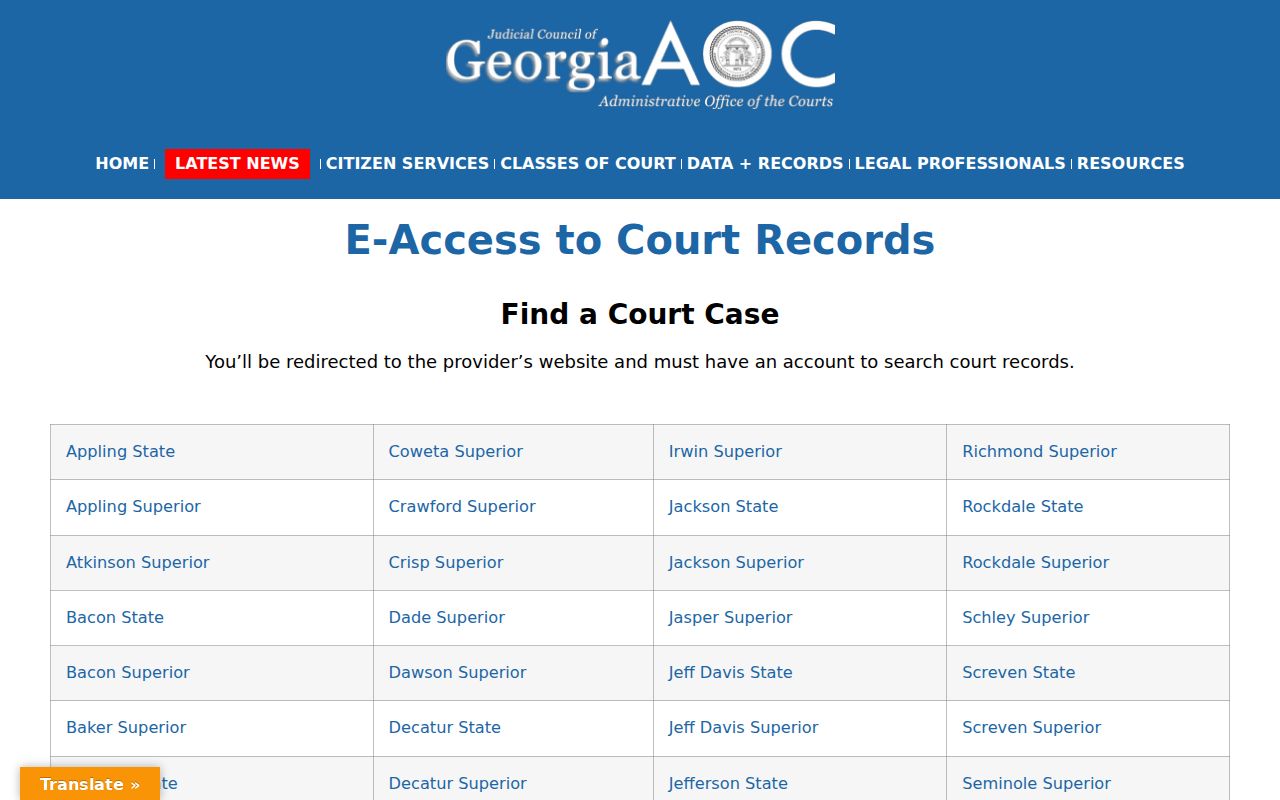
The gateway is a routing aid, not proof that every Jeff Davis County docket or document is online.
When No Superior Case Appears
A missing Superior Court result can mean the matter is too new, stayed at Magistrate Court, belongs to a municipal court, was never filed by the prosecutor, or is sealed. Check the arresting agency for the incident report, ask Magistrate Court about the early judicial file, and confirm city jurisdiction when the event occurred in Hazlehurst. Do not treat one clerk’s empty result as a clean statewide history. Court files, local bookings, and the Georgia Crime Information Center record are different products created at different stages.
Ask the clerk to repeat the search with aliases and alternate spellings. A filing year is often more useful than a broad date range. If prosecutors have not filed a felony count, contact the Brunswick Judicial Circuit office only for the procedure it lawfully provides; the district attorney is not a public background-check service. Municipal traffic or ordinance cases may never move to the felony clerk. A warrant file may also remain unavailable before execution. Record the office contacted, the search terms used, and the date of the response so a later follow-up does not repeat the same narrow query.
What the Case File Shows
Start with the docket because it inventories the case’s public events. Then request only the documents that answer the question. The filed charging paper shows what prosecutors pursued, while the judgment and disposition show the legal result. A sheriff charge label may differ from the final court count.
| Case Number & Court | Identifies the tribunal, file, filing date, judge, type, and status. |
|---|---|
| Charging Document | Accusation or indictment listing counts, statutes, and charge levels. |
| Docket Entries | Chronology of filings, arraignment, motions, calendars, plea, and closure. |
| Hearing Dates | Scheduled or completed court events; verify changes with the clerk. |
| Disposition & Judgment | Dismissal, plea, verdict, judgment, or another recorded outcome. |
| Sentence & Conditions | Custody, probation, fines, costs, and public conditions when recorded. |
Read the Docket in Order
A status label rarely tells the whole story. Read events by date and find the latest signed order. “Filed” confirms receipt, not a ruling. An arraignment records the plea stage. A motion entry may point to a separate order. A sentence can be followed by probation or revocation filings. Financial balances may sit in a separate clerk ledger. When the docket and a GCIC history disagree, obtain the court disposition and ask the contributing agency how to correct the repository entry.
Case headers generally identify the case number, filing date, court, judge, type, and status. Party entries name the State of Georgia, defendant, counsel, and prosecutor when entered. Charge rows should be read count by count because each can have a different statute and outcome. Bond information may appear in an order rather than the main header. A closed label alone does not say whether the result was dismissal, plea, trial judgment, transfer, or another event. Certified copies matter when an agency requires proof that the clerk’s electronic summary cannot supply.
Jeff Davis County Charging Offices
Jeff Davis County belongs to the Brunswick Judicial Circuit. The circuit district attorney decides which felony counts to file and prosecutes them, while the Superior Court clerk preserves the public pleadings and disposition. A prosecutor's investigative notes are not the same as the filed court record. For a public case history, start with the clerk's docket and request the accusation or indictment, plea, judgment, and sentence that appear there.
The district attorney's Jeff Davis office is at 14 Jeff Davis Street in Hazlehurst and can be reached at 912-367-8164. The Brunswick Circuit Public Defender serves qualifying clients through its Jeff Davis-serving satellite in Jesup. Neither office operates a background-check database. Their role explains why a charging choice, diversion result, or defense filing may change what the final Jeff Davis County criminal case shows after the first arrest allegation.
Stages of a Criminal Case
The arresting charge starts the process but does not control the outcome. A prosecutor decides what to file. Superior Court then records arraignment, motions, calendars, a plea or trial, disposition, and sentence. Jeff Davis County research did not establish reliable local completion times, so no fixed timeline should be assumed.
Case flow: Charges Filed › Arraignment › Pretrial › Plea or Trial › Disposition › Sentencing
Federal Files Use PACER
Jeff Davis County lies in the Southern District of Georgia. Federal criminal cases do not appear in the county Superior Court file. PACER provides official federal dockets and documents after registration and applies the current Judicial Conference fee schedule.
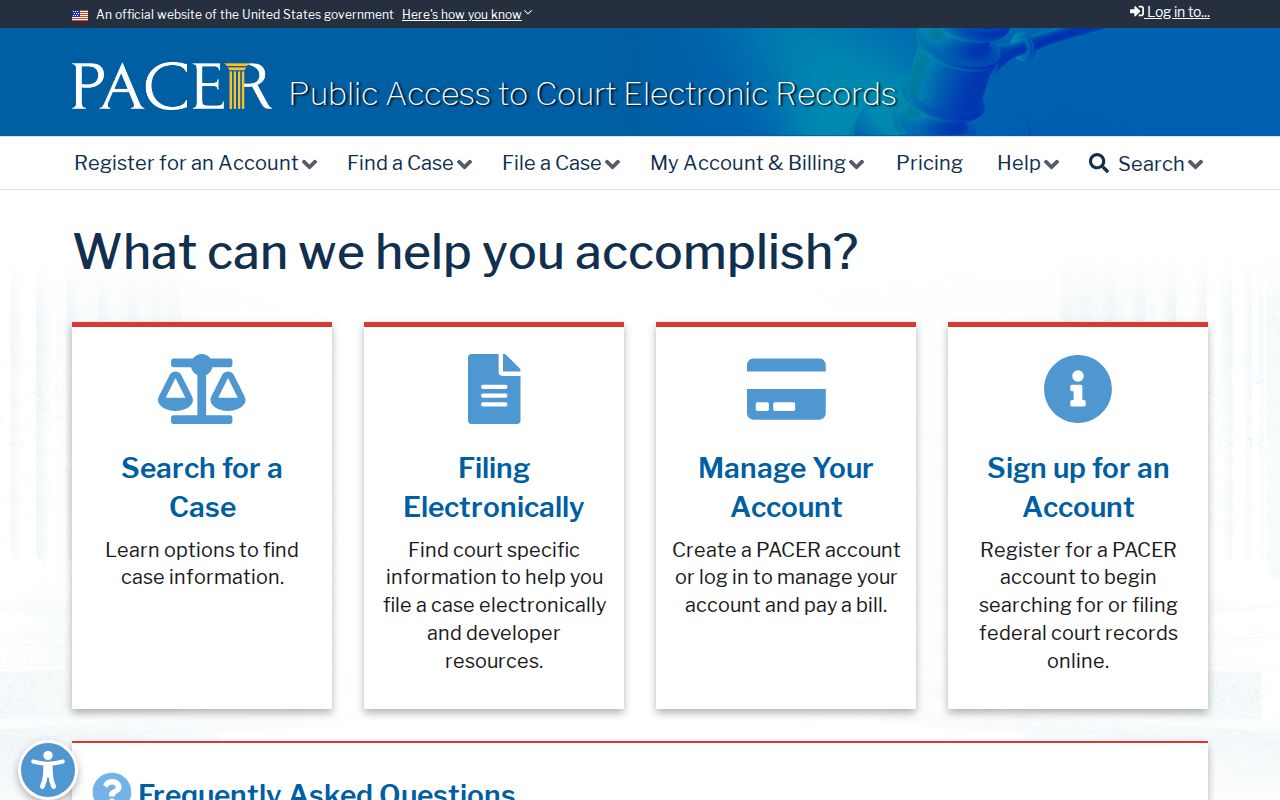
RECAP may supplement a search, but PACER and the federal clerk remain the authoritative sources.
The Southern District of Georgia website supplies court-specific access and contact details.
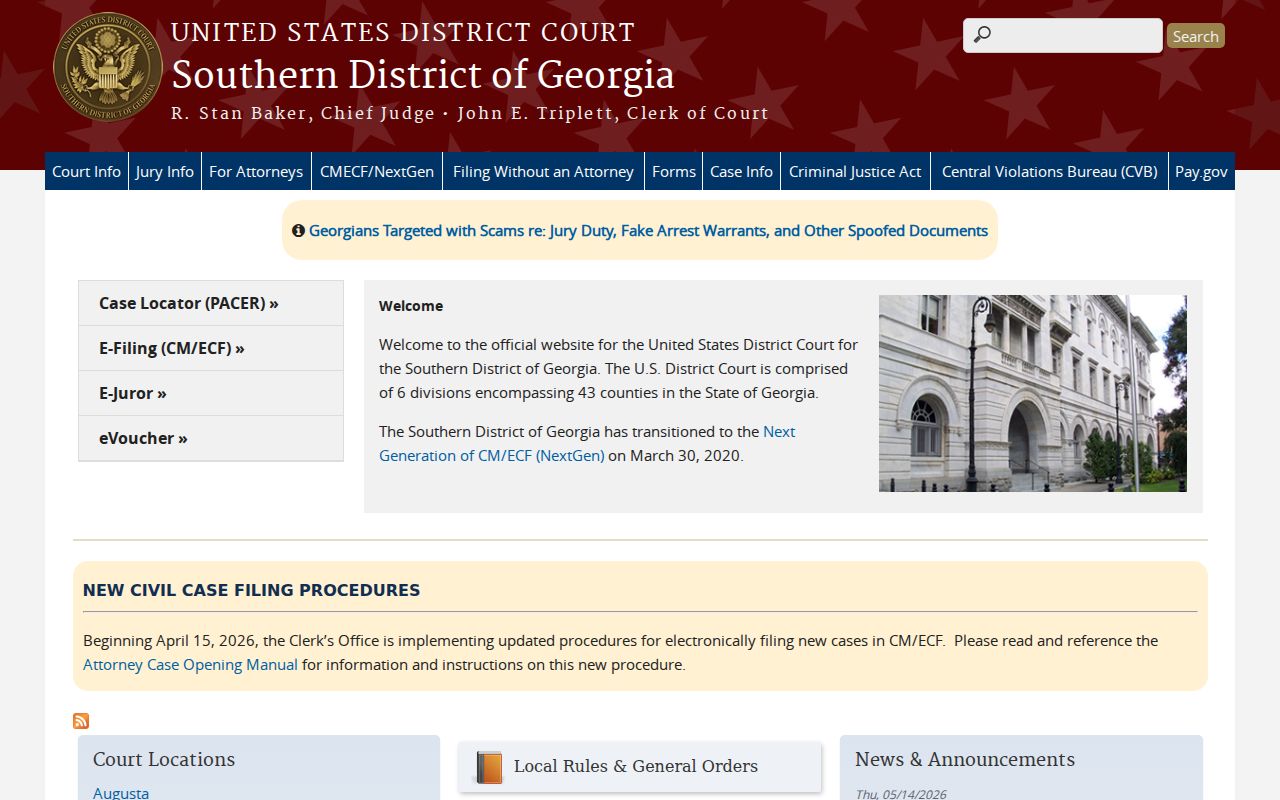
Use that district source when a federal agency or federal case number appears in the record.
Access & Restrictions
Public access does not make every field public. Clerks may redact Social Security numbers, sensitive victim information, juvenile material, and sealed or restricted content. Georgia’s Open Records Act governs agency records, but a demand under that act is not always the right procedure for judicial records; request court documents from the clerk under the court’s access rules. Online summaries can also omit document images that remain available at the counter for a lawful copy charge.
Georgia record restriction under O.C.G.A. § 35-3-37 concerns criminal-history dissemination and is distinct from sealing a court file. If a case is absent, ask whether it exists under another spelling, remains in another court, is archived, or is subject to a sealing order. Request written confirmation when practical, and verify the current certification fee before paying.
Juvenile files receive special protection under Georgia law, while victim identifiers and personal numbers can be redacted from an otherwise public filing. A restriction in GCIC does not automatically erase every judicial document. Conversely, a visible docket does not mean every attachment can be copied without review. Ask the clerk to explain whether the obstacle is a search problem, a redaction, a sealed file, an archive request, or a record that the office does not hold. That answer determines whether the next stop is another court, the arresting agency, or the state repository.